The life, career and legacy of Sandman Negus
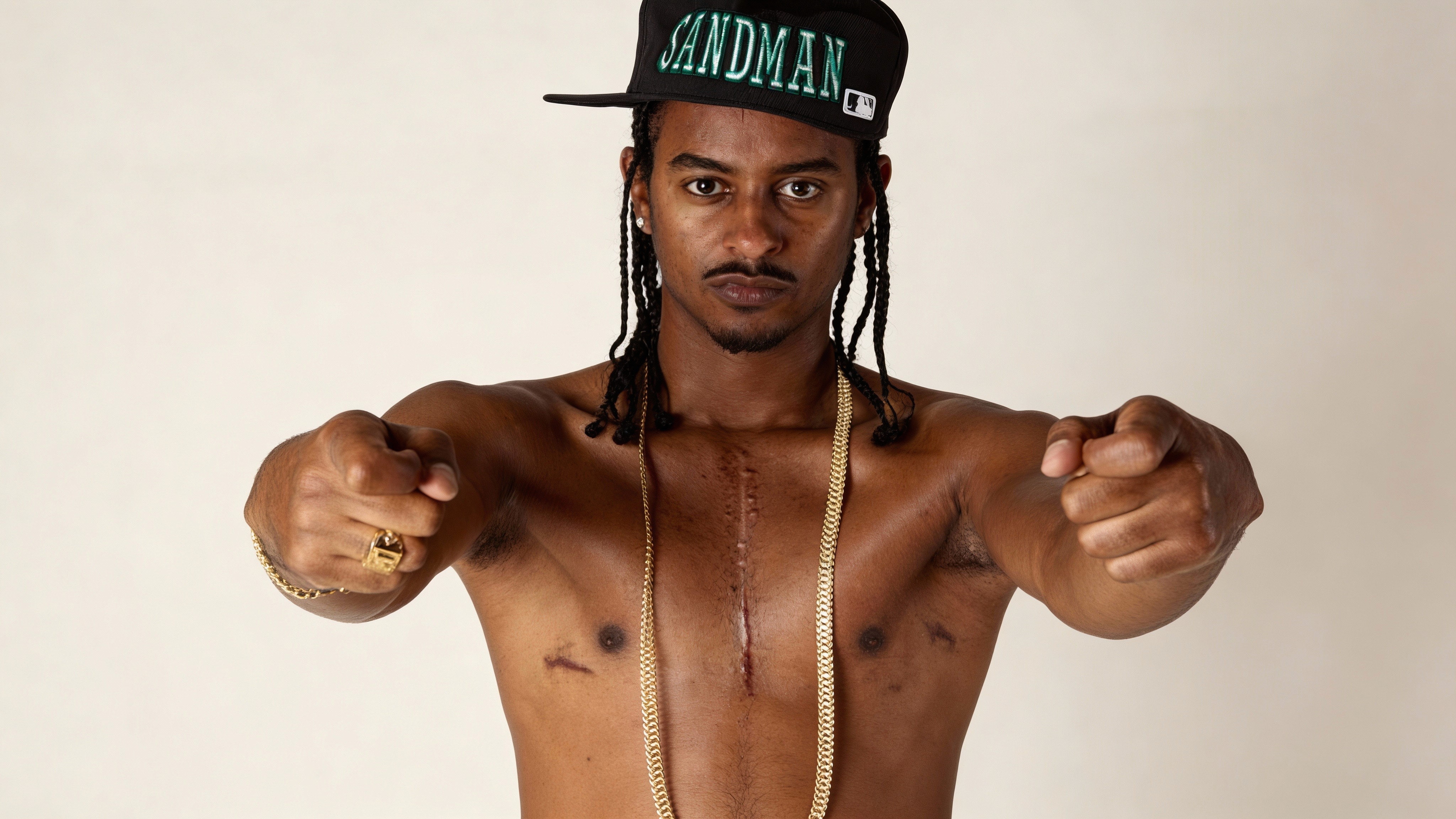
EARLY LIFE/
Sandman Negus, born Sador Fessahaye on January 12, 1986, entered the world amid displacement. His birth took place in Bulgaria, not by choice, but by circumstance—his Eritrean family forced to flee the devastation of the Eritrean–Ethiopian war. Before his first breath, his story had already crossed borders: from Eritrea to Khartoum, Sudan, briefly to Europe, and back again. Without a birth certificate and without stability, his earliest years were shaped by movement, survival, and resilience. In 1993, at just seven years old, Sador arrived in the United States, settling with his family in South Central Los Angeles. He was the ninth of ten children, raised in a disciplined household under a strict father who demanded strength and responsibility. The streets surrounding him were unforgiving—violence, drugs, and instability forced his family to relocate multiple times in search of safety. Amid this chaos, tragedy struck when his eldest brother, Yonas, passed away from cancer in 1997. That loss carved a permanent mark into Sandman’s soul. From that moment forward, he felt called to carry his brother’s dream forward—to uplift his family and rise beyond the environment that surrounded him. Music became his refuge, his weapon, and his purpose.
CAREER/
Long before the world heard his voice, Sador Fessahaye was already an artist. As a child, he revealed a rare, instinctive gift for visual expression—teaching himself to draw and paint without formal training. His hands learned to tell stories before his voice ever could. By junior high, that gift became purpose, earning him paid work creating murals and commissioned pieces across the city, leaving his mark on walls long before records carried his name. At 12, he began writing rhymes. By 15, he was recording. Music became more than expression—it became survival. Influenced by the raw truth of Tupac Shakur, the poetic depth of Nas, and the grit of Jeezy, his voice emerged from resilience, pride, and lived experience. He named himself Sandman, born of dust and history, then added Negus—King in Tigrinya—fully claiming his identity as Sandman Negus. In 2005, his talent reached national attention when Yahoo and Pepsi selected him as a West Coast representative for Mic Pass. Yet recognition did not spare him hardship. At 19, he was wrongfully incarcerated due to police corruption—later cleared, but deeply changed. By 20, he chose to reclaim his future through music, giving rise to his defining mixtape, Extraz Vol. 1.
LEGACY/
Sandman Negus did not create music for fame. He created it to uplift, educate, and empower—for his community, his country, and for those who felt unseen and unheard. He understood rap as one of the most universal languages of truth, a powerful vessel for expressing pride, self-worth, resilience, and resistance. Through it, he gave voice to struggle and dignity alike.
His life was shaped by exile, loss, violence, and survival, yet his legacy stands in strength, cultural pride, and unwavering authenticity.
This website exists to honor that legacy.
Here, Sandman’s unreleased music continues to speak—unfinished chapters now shared with the world. His voice lives on in every lyric and every beat, carrying messages of endurance, identity, and hope. Sandman Negus did it all for Eritrea, for his people, his community, and for the belief that anyone can rise beyond circumstance.

MUSIC/
Sandman’s sound was ahead of its time—rooted in truth, cultural pride, and a consciousness that remains strikingly relevant today. His music was never confined to a moment; it was created for longevity. Drawing from the streets of Los Angeles and the deep history of Eritrea, he used rap as a universal language to uplift, educate, and instill self-worth. Through rhythm and rhyme, he bridged continents, gave voice to the unheard, and transformed struggle into strength.
By 2009, Sandman Negus was touring internationally, building a global following, and drawing interest from major labels. Yet he remained unwavering in purpose—representing his people, his community , and his truth without compromise. His creativity extended beyond music into visual art, reflecting the same depth and intention found in his lyrics.
Though his life was cut short, his career did not end.
Through this unreleased discography stewarded by Rebel Kings Ent., Sandman Negus’s voice lives on—timeless, current, and undiminished. His music continues to speak across generations, echoing for centuries into the future. It remains a source of strength for the unheard, a call to pride for his people, and a testament to resilience.
Sandman Negus is not bound by time.
His message endures.
His music lives forever